The Good
- Some tense stealth moments that recall the series' roots
- Decent variety across the three playable characters
- Atmospheric World War II environments
- Solid sniping mechanics
- Multiple approach options for most missions
The Bad
- Oversimplified gameplay compared to previous titles
- Mediocre AI that breaks immersion
- Dated graphics even by 2006 standards
- Limited replay value
- Inconsistent difficulty spikes
Who It's For
Commandos Strike Force primarily targets fans of World War II first person shooters who enjoy mixing stealth elements into their gameplay. While long time series fans may be disappointed by the departure from tactical strategy, newcomers seeking a hybrid stealth FPS experience with some tactical elements might find value here. The game is particularly suited for players who enjoy methodical sniping and infiltration missions, though they should temper their expectations regarding AI sophistication and graphics quality. It's not for those seeking a pure stealth experience or tactical depth comparable to the original Commandos games.
Overview
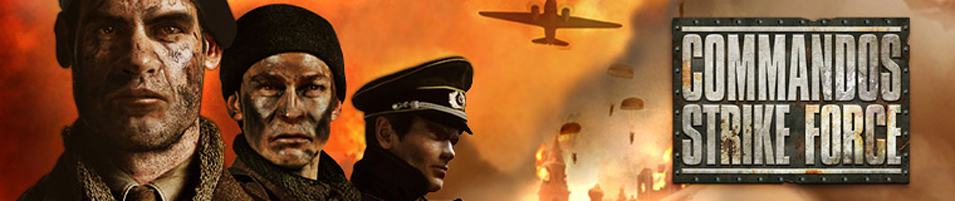
Released in April 2006 by Eidos Interactive and developed by Pyro Studios, Commandos Strike Force represents a dramatic shift for the beloved tactical strategy series. Abandoning the signature top down perspective and complex squad management of its predecessors, Strike Force reimagines the franchise as a first person shooter with light stealth elements. Set across various World War II theatres, players control three specialized commandos: a sniper, a green beret, and a spy. Each mission allows players to swap between these characters, theoretically maintaining some strategic elements while modernizing the gameplay for console audiences. This controversial transformation arrived late in the Xbox's lifecycle, facing stiff competition from established FPS franchises and leaving many to question whether this new direction was the right move for the series.
Graphics and Presentation
Commandos Strike Force struggles to impress visually, even considering the Xbox's hardware limitations. The character models lack detail and animation fluidity, with stiff movements and dated textures that feel behind the curve for 2006. Environmental textures suffer from notable repetition, though the level designs do capture the atmosphere of their World War II settings reasonably well, from snow covered Russian villages to French countryside outposts.
The game maintains a generally stable frame rate around 30fps, though significant dips occur during hectic firefights or when multiple enemies are on screen. Draw distance is surprisingly decent, important for the sniping sections, but pop in becomes noticeable when quickly scanning environments through the scope.
UI elements are functional if uninspired, with a minimalist HUD that adequately conveys essential information without cluttering the screen. Cut scenes utilize the in game engine, resulting in choppy animations and wooden character expressions that fail to convey dramatic moments effectively. While the game runs adequately on the Xbox hardware, it never pushes the system in meaningful ways, feeling more like a mid generation title than a late cycle release.
Sound and Music
The audio presentation delivers mixed results that mirror the game's broader identity crisis. Voice acting ranges from passable to poor, with uneven accents and wooden delivery undermining dramatic moments. The Nazi soldiers speak with cartoonish German accents that break immersion, while your commando team's dialogue often feels disconnected from the gravity of their missions. The orchestral score fares better, providing appropriate military themes that enhance tension during stealth sequences and adequately punctuate action moments.
Sound effects demonstrate competent technical implementation, with satisfying weapon reports and environmental audio that aids in spatial awareness. Footsteps on different surfaces help track enemy movements, while ambient sounds build atmosphere effectively. The mixing occasionally struggles during chaotic sequences, with important audio cues sometimes getting lost in the confusion. Despite these issues, the sound design generally supports the gameplay, even if it rarely elevates it.
Gameplay Mechanics
The core gameplay loop revolves around infiltrating enemy strongholds using the unique abilities of your three commandos. The Green Beret specializes in close combat and can take more damage, the Sniper excels at long range elimination and marking enemies, while the Spy can steal uniforms and interact with enemies without raising suspicion. This variety theoretically encourages tactical approach to missions, but the execution often falls short of its potential.
Control schemes follow standard FPS conventions of the era, with serviceable but occasionally clunky weapon handling. The stealth mechanics feel simplistic compared to contemporary titles like Splinter Cell, with binary detection states and predictable enemy patterns. Character switching adds tactical options but feels underutilized, with many missions focusing primarily on one commando while relegating others to specific sequences.
Level design offers multiple paths to objectives, but the limited AI routines mean that once you've found a working strategy, there's little incentive to experiment. Progression is strictly linear, with no meaningful character development or skill improvements to unlock. The shooting mechanics work adequately for both stealth and combat scenarios, though the game clearly favours the former with its damage model and enemy placement.
Story and Setting
The narrative follows an elite commando unit conducting covert operations across various World War II theatres. While the historical backdrop provides a solid foundation, the story rarely rises above genre clichés. The plot hits familiar beats: sabotaging Nazi super weapons, disrupting supply lines, and gathering intelligence, but lacks the character development or dramatic tension to make these missions truly engaging. The writing tends toward functional rather than compelling, with dialogue serving primarily to deliver mission objectives rather than build character relationships.
World building suffers from a disconnect between the game's serious tone and its more arcade like gameplay elements. Mission environments, while varied, feel more like game levels than lived in spaces. The narrative pacing maintains a steady rhythm but fails to build to meaningful climaxes, with mission outcomes having little emotional weight beyond simple success or failure.
Content and Value
The campaign spans roughly 8 to 10 hours, offering moderate replay value through different approach options in most missions. Additional difficulty levels adjust enemy awareness and damage models, though the core experience remains largely unchanged. The game includes a basic multiplayer component with standard deathmatch and team based modes, but the small player count and limited maps restrict long term appeal.
At its current preowned price point of £8.99, Strike Force represents a modest value proposition for fans of World War II shooters or those curious about this unique chapter in the Commandos series. The package includes no significant extras or unlockable beyond standard difficulty modes, and the multiplayer servers are long defunct, leaving only system link as an option for those interested in competitive play.
Technical Performance
Loading times on the original Xbox are reasonable, typically ranging from 15 to 30 seconds between missions. The game employs a checkpoint save system that generally places save points at logical mission intervals, though some spacing can feel inconsistent during longer missions. The auto save feature works reliably, important given the trial and error nature of some stealth sequences.
Bug testing reveals occasional AI pathing issues and rare instances of enemies clipping through geometry. While not game breaking, these technical hiccups can disrupt stealth approaches and force mission restarts. Crash frequency is low, with the game demonstrating overall stability during extended play sessions, though texture streaming hitches occur when rapidly transitioning between areas.
The Verdict
Commandos Strike Force represents a bold but ultimately flawed attempt to modernize the series for console audiences. While it occasionally captures moments of tactical tension that recall the franchise's glory days, the shift to first person perspective and simplified gameplay mechanics strips away much of what made the series special. The competent but unremarkable shooting and stealth systems fail to distinguish the game in either genre, leaving it in an awkward middle ground that may satisfy neither action fans nor strategy purists.
- Atmospheric World War II settings
- Varied character abilities enable multiple approaches
- Solid sniping mechanics
- Functional stealth elements
- Simplified gameplay disappoints series fans
- Dated graphics and animation
- Limited replay value
- Weak narrative and character development
Final Score: 6/10
A mediocre shooter that sacrifices the series' strategic depth without fully committing to its new identity. While some may find enjoyment in its stealth lite gameplay, most will be better served by more focused experiences in either the FPS or strategy genres.
Review Stats
- Time Played: 12 hours
- Review Copy: Purchased at retail
- Tested on: Original Xbox
- PEGI Rating: 16
- Current Preowned Price: £8.99
Technical Specifications
- Resolution: 480p
- Frame Rate: 30 fps
- Storage Required: 3.2 GB
- Online Features: Yes (Defunct)
- Number of Players: 1-8
By OGXbox Archive